
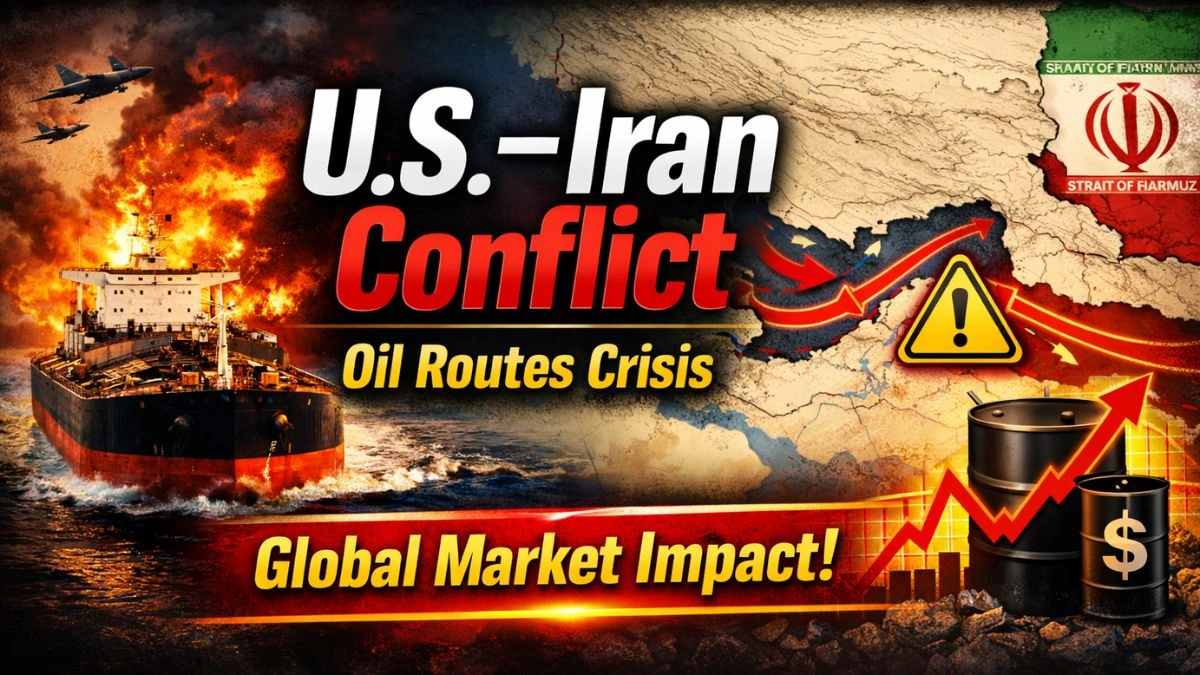
Global markets are reacting cautiously amid geopolitical tensions. Here are the latest figures:
- DJIA: 48,384.18 (down 0.31%)
- S&P 500: 6,993.23 (up 0.37%)
- Nasdaq: 23,848.62 (up 0.89%)
- Russell 2000: 2,709.02 (up 0.12%)
- U.S. 10-Year Yield: 4.279%
- VIX (Volatility Index): 17.79 (down 3.10%)
- Gold: $4,843.20 (down 0.14%)
- Bitcoin: $73,970.16 (down 0.43%)
- Crude Oil: $91.90 (up 0.68%)
- Dollar Index: 95.16 (down 0.02%)
- KBW Nasdaq Bank Index: 167.86 (up 0.55%)
- S&P GSCI Index Spot: 701.44 (up 0.47%)
These movements highlight mixed investor sentiment, with rising oil prices and stable equities despite geopolitical uncertainty.
U.S. Enforces Naval Blockade Against Iran
The ongoing U.S.–Iran conflict escalated significantly on April 14, 2026, as the United States imposed a naval blockade on Iran’s ports. This move is part of a broader strategy to restrict maritime access and apply economic pressure.
In a notable development, U.S. forces reportedly turned back oil tankers heading toward Iran, reinforcing the blockade’s strict enforcement.
Strait of Hormuz Sees Limited but Improving Traffi
Despite the conflict, maritime movement has not completely halted.
- Over 20 commercial vessels passed through the Strait of Hormuz within 24 hours, according to U.S. officials.
- Although this number remains significantly lower than pre-war levels, it indicates a gradual improvement in shipping activity.
The Strait of Hormuz, a critical global oil chokepoint, remains central to international trade and energy supply chains.
U.S. Military Operations and Strategic Actions
To maintain control and ensure safe navigation:
- Two U.S. warships conducted a freedom of navigation operation in the region.
- The mission aimed to establish a secure passage for commercial ships.
- U.S. Central Command initiated mine-clearing operations, targeting suspected Iranian sea mines.
These actions are designed to restore confidence among global shipping operators and stabilize trade routes.
Political Pressure and Strategic Objectives
Former President Donald Trump has called on Iran to reopen the Strait of Hormuz, emphasizing the importance of uninterrupted global commerce.
The U.S. strategy appears focused on:
- Ensuring free maritime trade
- Preventing supply disruptions
- Reducing geopolitical risk in energy markets
Impact on Global Industries and Markets
The conflict is already affecting global businesses:
- Luxury brand Hermès reported weaker first-quarter sales.
- The Middle East, once a strong market for luxury goods, is now facing uncertainty.
- The company’s stock declined, raising concerns about the sector’s recovery in 2026.
Gold Prices Reflect Market Sentiment
- Gold prices are hovering near $4,850 per troy ounce
- Expectations of renewed U.S.–Iran negotiations are easing inflation concerns linked to energy prices
Gold continues to act as a safe-haven asset, though its movement suggests cautious optimism among investors.
Other Global Developments
- A major cryptocurrency theft on April Fools’ Day is suspected to involve North Korea
- The attack reportedly relied on social engineering rather than advanced malicious code
European Union Targets Big Tech
- The EU is preparing to require Meta Platforms to revise its WhatsApp AI policy
- Regulators argue that the policy restricts competition by limiting access for rival AI chatbots
Conclusion
The escalation of the U.S.–Iran conflict in April 2026 is reshaping global trade, energy flows, and financial markets. While the U.S. blockade has tightened pressure on Iran, efforts to maintain shipping through the Strait of Hormuz signal a balancing act between enforcement and economic stability.
Markets remain resilient but cautious, with oil prices rising and equities holding steady. At the same time, industries like luxury goods and technology are beginning to feel the ripple effects.
As geopolitical tensions continue, the global economy will closely watch developments in the region, particularly any progress in diplomatic negotiations or further disruptions to critical trade routes.