
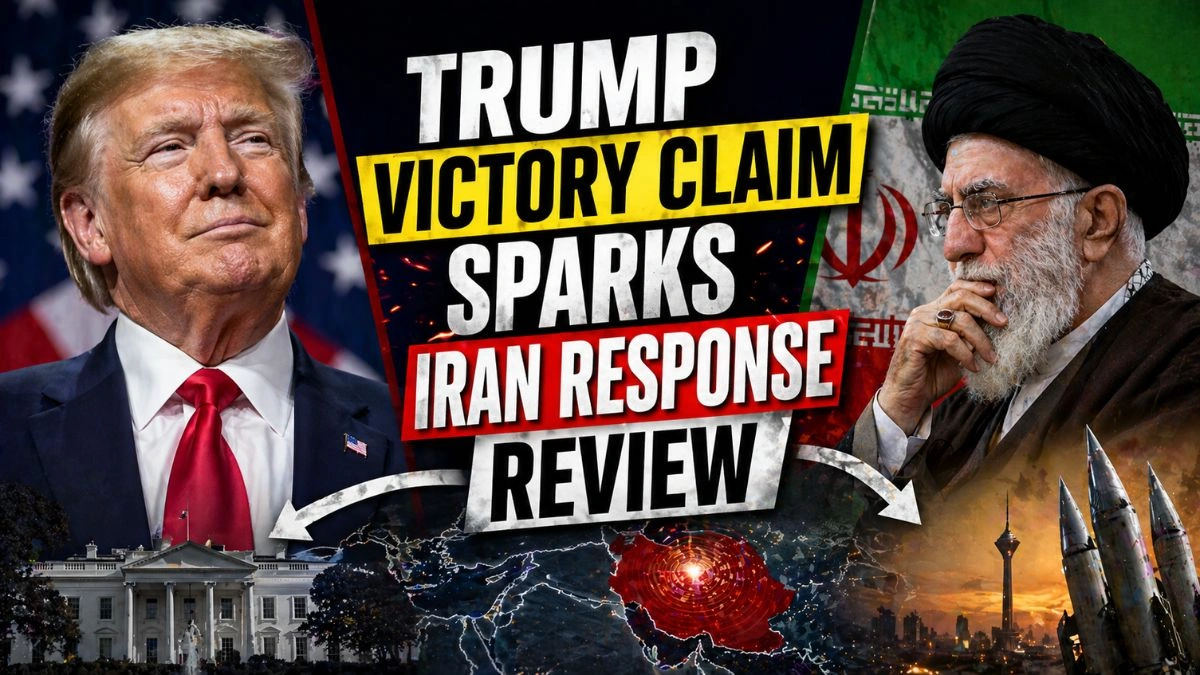
American intelligence agencies are reportedly examining how Iran could respond if President Donald Trump unilaterally declares victory in the ongoing two-month conflict between the United States and Iran.
According to officials familiar with the matter, the intelligence review was requested by senior White House officials who want a clearer understanding of the political, military, and diplomatic consequences of scaling back U.S. involvement.
The war has already claimed thousands of lives and is becoming a growing political challenge for the White House ahead of the 2026 midterm elections.
Why the White House Is Considering De-Escalation
Sources said some Trump advisers are concerned the prolonged conflict could hurt Republicans during upcoming elections.
A rapid military drawdown could reduce political pressure on the administration. However, officials also worry that stepping back too quickly may allow Iran to rebuild its nuclear and missile programs.
U.S. officials reportedly believe that if Trump announces victory and significantly reduces military presence in the region, Iran may interpret that move as a strategic win.
If the U.S. claims victory while maintaining strong military forces nearby, Iranian leaders may see it as a negotiation tactic rather than a true end to the war.
CIA and White House Response
The Central Intelligence Agency said it was not familiar with the reported intelligence review.
The Office of the Director of National Intelligence declined to comment.
White House spokesperson Anna Kelly stated that negotiations with Iran remain ongoing and emphasized that the administration will only agree to terms that protect U.S. national security interests.
She reiterated that Iran will not be allowed to obtain nuclear weapons.
Political Pressure Continues to Grow
Recent Reuters/Ipsos polling showed the war remains deeply unpopular among Americans.
Only 26% of respondents said the military campaign has been worth the cost.
Just 25% believe the conflict has made the U.S. safer.
These numbers have increased pressure on Trump as fuel prices continue rising due to disruptions in global oil transportation.
Strait of Hormuz Crisis Raises Economic Concerns
Strait of Hormuz remains a major concern after Iran disrupted shipping routes by targeting vessels and placing mines in the region.
The waterway handles roughly 20% of global crude oil shipments.
The disruption has contributed to higher global energy prices and rising gas costs for American consumers.
Officials believe reopening the shipping route could help lower fuel prices.
Military Options Still Available
While diplomatic talks continue, military action remains an option.
Officials said potential responses still include renewed airstrikes targeting Iranian military infrastructure and leadership.
However, sources indicated that a large-scale ground invasion of Iran now appears less likely than it did weeks ago.
Ceasefire Has Created New Challenges
Officials also warned that Iran may be using the current ceasefire to rebuild military capabilities.
Reports suggest Iran has recovered missile launchers, drones, weapons, and other military equipment damaged during earlier U.S. and Israeli strikes.
That could make restarting full-scale military operations more difficult and costly.
Conclusion
The U.S.-Iran conflict remains highly unpredictable as intelligence agencies evaluate possible outcomes of a Trump victory declaration. With rising political pressure, economic consequences, and military risks, the administration faces difficult choices in the coming days.