
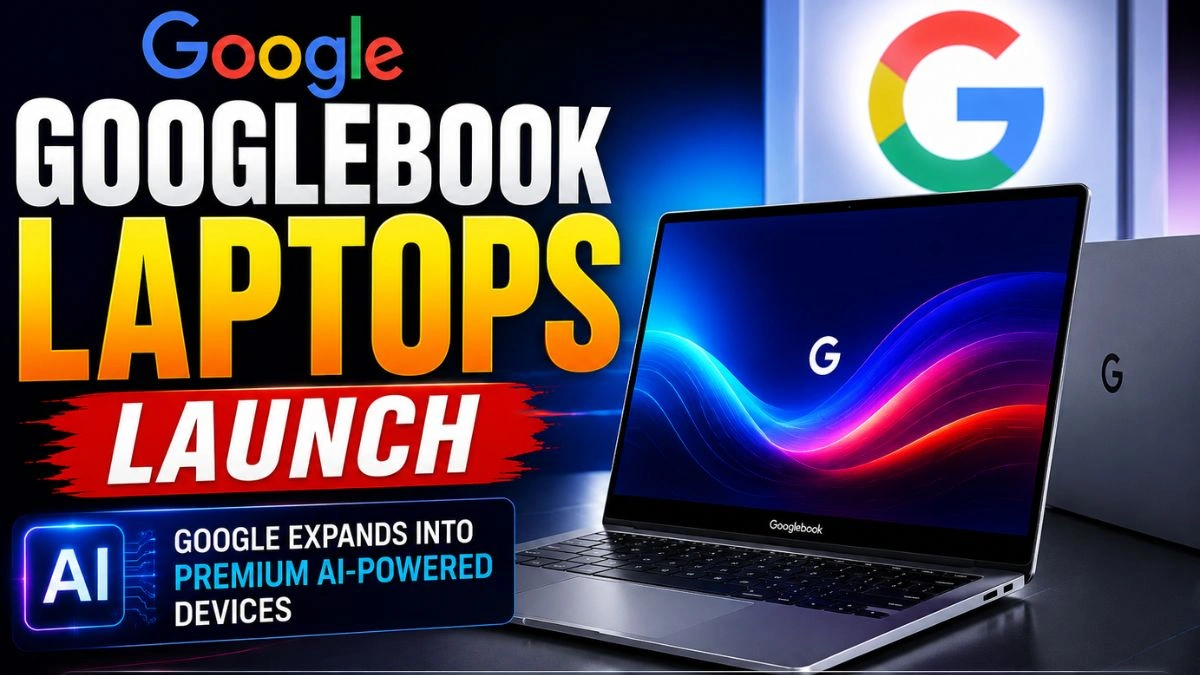
Google has introduced a new category of premium laptops called Googlebook, marking a major step into the high-end computing market. These devices will run on Android and integrate advanced AI features powered by Gemini, aiming to compete with traditional laptops from Apple and Windows-based systems.
A New Direction for Google in Laptops
The announcement, made alongside upcoming Android 17 updates, signals a stronger push by Alphabet Inc. into the laptop segment. Googlebook devices are designed to merge the capabilities of Android and ChromeOS, the system behind Chromebooks.
Unlike budget-focused Chromebooks, these new laptops will deliver enhanced performance, improved hardware quality, and premium features. Each model will include a unique “Glowbar” that lights up when the device powers on.
Hardware Partnerships and Market Strategy
Google is collaborating with major manufacturers such as Dell Technologies, Lenovo, and HP Inc. to produce Googlebook models. Additional partners like ASUS and Acer are also expected to launch devices.
This move places Google in direct competition with new offerings like Apple’s MacBook Neo, which targets the mid-to-premium laptop segment.
Gemini AI Integration: Core of the Experience
A key highlight of Googlebook is the deep integration of Gemini AI into the operating system. According to Sameer Samat, this allows Google to deliver a more advanced AI-driven experience compared to existing laptops.
New AI-powered features include:
- Magic Pointer: A context-aware cursor that suggests actions like quick replies or meeting insights
- Custom Widget Creation: Users can generate personalized widgets using Gemini
- Background AI Assistance: AI functions operate seamlessly without interrupting user activity
These features aim to make everyday computing smarter and more intuitive
Developer Ecosystem and Cross-Device Experience
Googlebook is also designed to attract app developers by enabling easy adaptation of Android apps for laptops. This ensures a consistent experience across devices and allows users to run mobile apps directly on their laptops.
This strategy mirrors efforts by Apple, which introduced iPhone-to-Mac integration features in recent years.
Role of ChromeOS in the Future
Despite the launch of Googlebook, ChromeOS will continue to play a significant role, especially in education. Over 60% of U.S. schools still rely on Chromebooks, making them a key part of Google’s ecosystem.
Conclusion
Google’s introduction of Googlebook laptops represents a bold move into the premium computing market, combining Android flexibility with powerful Gemini AI capabilities. By partnering with major hardware brands and focusing on AI-driven innovation, Google aims to redefine the laptop experience. While competition with Apple and Windows devices remains strong, Googlebook could reshape how users interact with laptops in an increasingly AI-driven world.