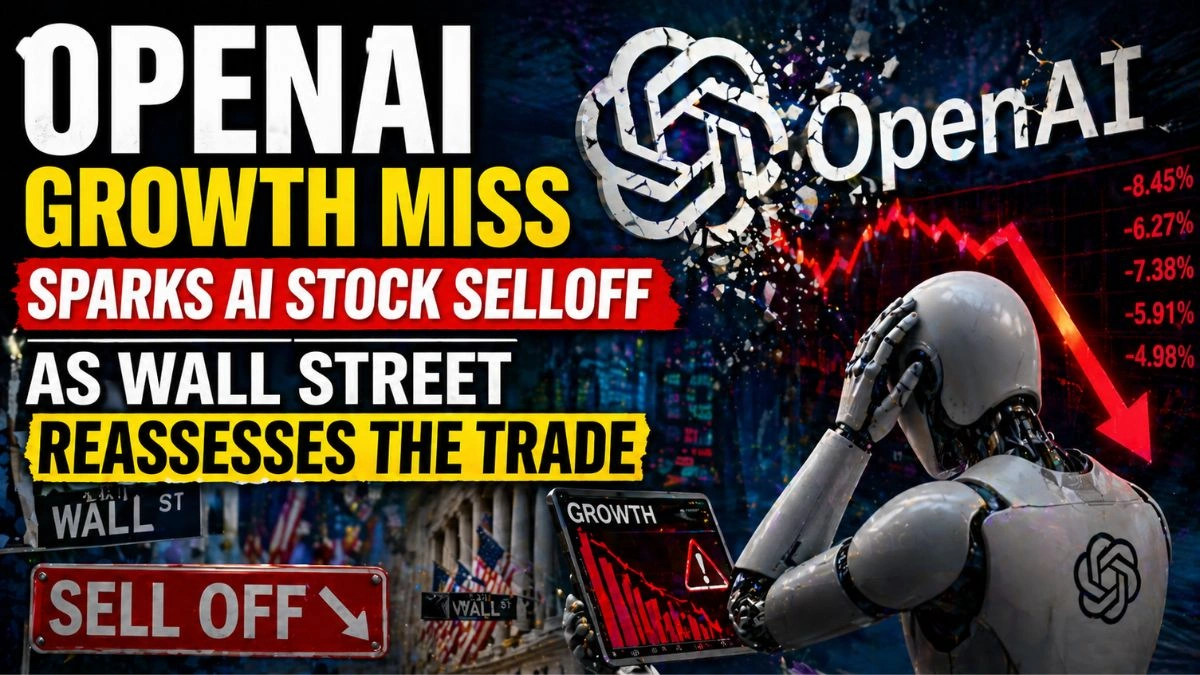
A new report involving OpenAI triggered major concerns across Wall Street after claims surfaced that the company missed internal user growth and revenue goals.
For years, investors treated artificial intelligence as one of the safest growth bets, fueling massive investments in chips, cloud infrastructure, and AI-related companies. That confidence weakened on April 28 after reports suggested OpenAI may be struggling to maintain the rapid growth needed to justify huge spending commitments.
What the Report Revealed
According to reports from The Wall Street Journal and CNBC, OpenAI failed to hit its goal of reaching 1 billion weekly active users by the end of 2025.
The company also reportedly missed multiple revenue targets earlier this year.
Meanwhile, ChatGPT’s share of generative AI web traffic reportedly dropped from 86.7% last year to 64.5% in January 2026, while Google’s Gemini increased from 5.7% to 21.5%.
Anthropic has also gained market share in coding and enterprise AI services.
Concerns Over Massive Compute Costs
Reports indicated that OpenAI CFO Sarah Friar warned internally that the company may face challenges covering massive computing contracts if revenue growth slows.
These commitments reportedly involve long-term agreements worth hundreds of billions of dollars with companies including:
- Oracle Corporation
- Nvidia
- Microsoft
OpenAI CEO Sam Altman publicly denied concerns, calling the report inaccurate and stating the company remains committed to expanding computing capacity.
AI Stocks Fall Following the News
The report triggered a broad selloff across AI-related stocks:
- ORCL fell more than 4%
- NVDA dropped 3.3%
- AMD declined 5.5%
- Arm Holdings plunged 7.4%
- SoftBank Group dropped as much as 11% in Tokyo
- CoreWeave slipped 3.5%
Investors became worried that slower growth at OpenAI could reduce future spending across the broader AI ecosystem.
Why This Matters for Retirement Investors
Many retirement accounts and index funds hold heavy exposure to major AI stocks.
Companies such as Nvidia, Oracle, Broadcom, and other large tech firms now make up a significant portion of major indexes like the S&P 500.
If AI spending slows, retirement portfolios could also feel the impact.
What Investors Should Watch Next
Market analysts are now closely monitoring:
- Oracle’s future earnings reports
- OpenAI’s potential IPO timeline
- Competition from Google Gemini and Anthropic
- Future AI infrastructure spending trends
These factors may determine whether the AI boom continues or faces deeper corrections.
Conclusion
OpenAI’s reported growth slowdown created fresh uncertainty around one of Wall Street’s biggest investment themes. While the AI industry remains powerful, investors are now paying closer attention to profitability, competition, and long-term sustainability.