
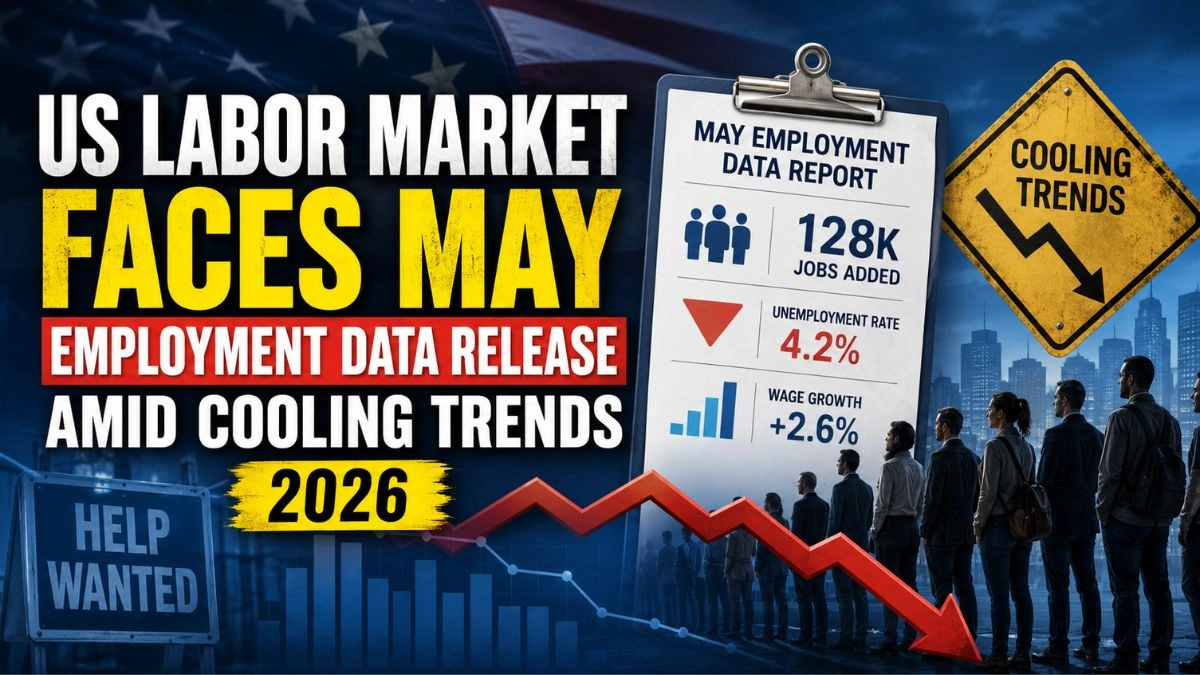
The U.S. labor market is once again in focus as investors, economists, and policymakers closely monitor the latest employment data for signs of whether the economy is beginning to slow after years of resilience. While recent job reports have continued to beat expectations, underlying indicators suggest the labor market may be gradually cooling as businesses become more cautious amid inflation pressures, high interest rates, and global uncertainty.
According to the latest report from the U.S. Bureau of Labor Statistics, the American economy added 115,000 jobs in April 2026, significantly above analyst expectations of around 62,000. The unemployment rate remained unchanged at 4.3%, signaling that the labor market is still relatively stable despite growing economic concerns.
Healthcare remained one of the strongest-performing sectors, adding roughly 37,000 jobs during the month. Transportation and warehousing also posted strong gains with approximately 30,000 new positions, while retail trade contributed more than 22,000 jobs. Social assistance services continued their upward trend as demand for support services remained strong.
However, despite the stronger-than-expected headline numbers, economists believe several warning signs are emerging beneath the surface. One of the biggest concerns is the sharp rise in part-time employment for economic reasons. The number of Americans working part-time because they could not find full-time jobs increased by 445,000 in April, reaching nearly 4.9 million workers.
At the same time, labor force participation remained weak at 61.8%, reflecting ongoing structural challenges in the workforce. Economists point to demographic shifts, retirements, and tighter immigration policies as major reasons why labor supply growth has slowed in recent years.
Several sectors are also beginning to show signs of weakness. Federal government employment declined again in April, while industries such as manufacturing, information technology, and finance experienced job losses. The information sector, which includes technology and data-processing companies, lost another 13,000 jobs as firms continue reducing hiring and restructuring operations around artificial intelligence investments.
Rising geopolitical tensions and inflation concerns are further complicating the outlook. Higher energy prices linked to the ongoing Iran conflict have increased pressure on consumers and businesses alike. Consumer confidence recently dropped to record lows as Americans worried about fuel prices and the overall economic outlook.
The latest labor market data also carries major implications for the Federal Reserve. Stronger job growth reduces the urgency for immediate interest rate cuts, especially as inflation risks remain elevated. Many analysts now believe the Fed may continue keeping rates steady for longer than previously expected.
As markets await the official May employment report scheduled for early June, investors will be watching closely to determine whether the U.S. economy can maintain its momentum or whether signs of labor market cooling become more pronounced in the months ahead.